If you’ve asked a welder about a job, you’ve probably heard both terms. TIG (tungsten inert gas, also called GTAW) and MIG (metal inert gas, or GMAW) are the two most common ways to weld metal with an electric arc and a shielding gas. They overlap, but they aren’t interchangeable, and picking the right one affects how your part looks, how long the job takes and what it costs.
Short version: TIG is precise, clean and slow. MIG is fast, efficient and a little less refined. Thin metal, aluminum, stainless and anything that will be seen usually points to TIG. Thick steel and long production welds usually point to MIG.
How each process works
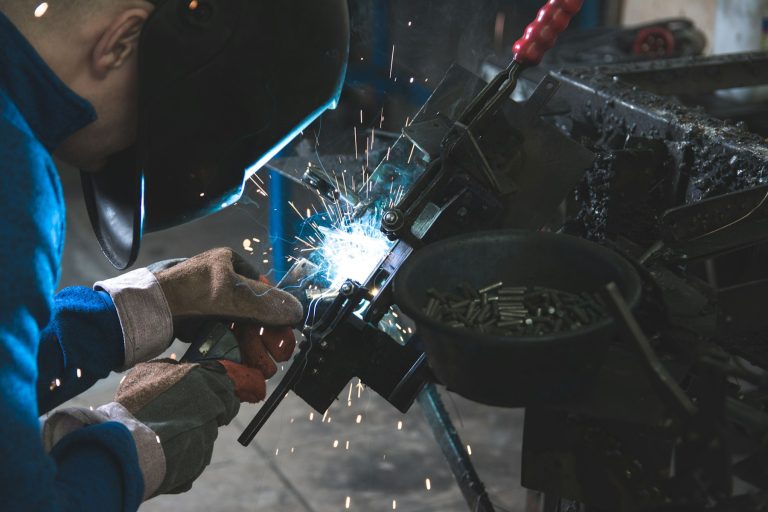
In MIG welding, a spool of wire feeds continuously through the gun. The wire is both the electrode and the filler. Pull the trigger and the machine feeds wire and gas at a set rate. It’s a bit like a hot glue gun for metal: point, pull and move.
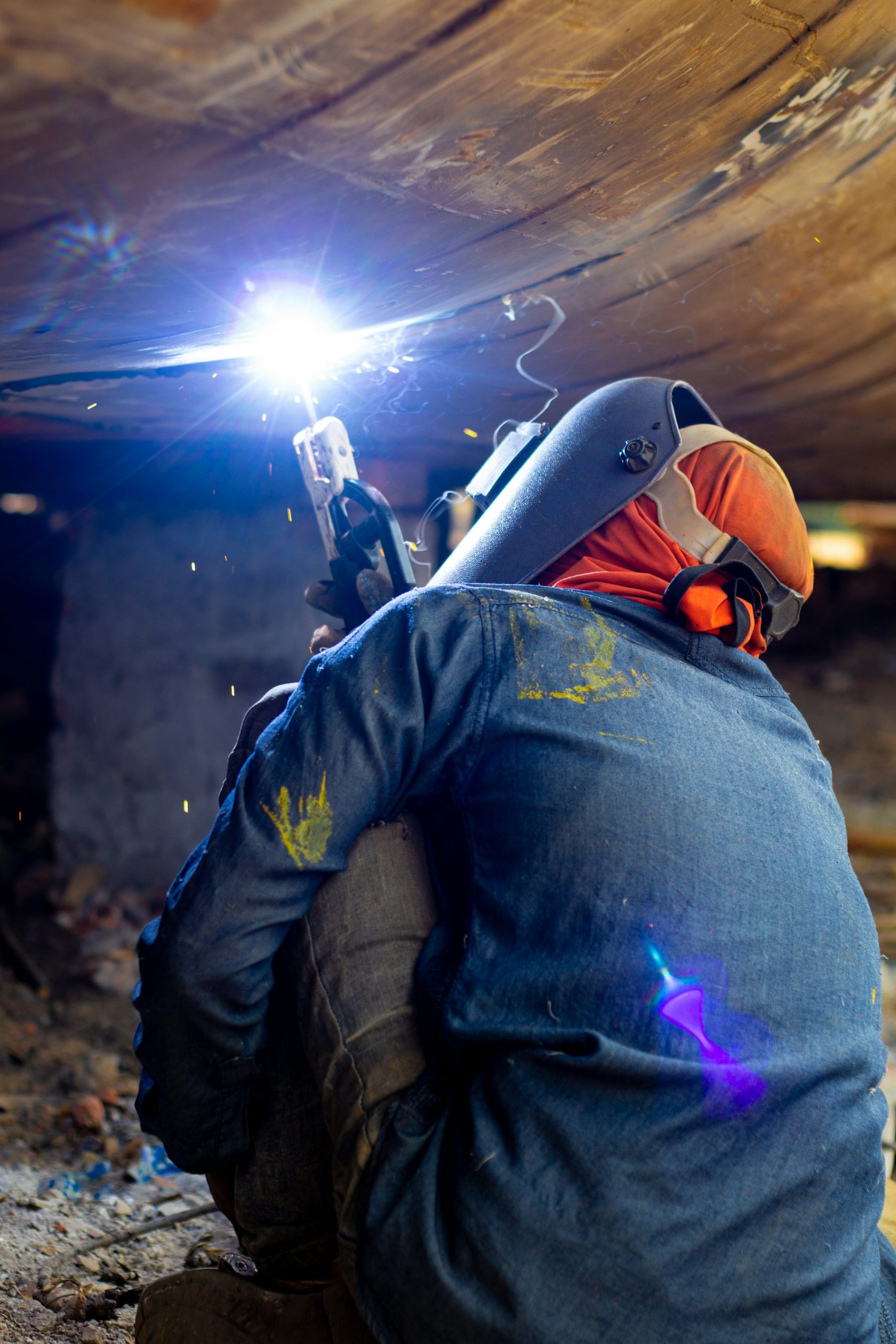
In TIG welding, a tungsten electrode makes the arc but doesn’t melt into the weld. The welder holds the torch in one hand and feeds a separate filler rod with the other, while controlling heat with a foot pedal or finger control. Every part of the weld (heat, filler, speed) is adjusted in real time.
Side-by-side comparison
| TIG | MIG | |
|---|---|---|
| Speed | Slow | Fast |
| Precision and control | Very high | Good |
| Appearance | Small, neat, little spatter | Wider bead, some spatter |
| Thin metal | Excellent | Harder (burn-through risk) |
| Aluminum | Excellent with AC | Possible with spool gun |
| Stainless | Preferred | Possible |
| Thick steel | Slow, many passes | Efficient |
| Labor cost | Higher | Lower |
When TIG is the right call
- Thin material. Sheet metal, thin-wall tube and anything under about 1/8 inch, where too much heat blows holes or warps the part.
- Aluminum. AC TIG cleans the oxide layer while welding and gives the control aluminum needs. See what to know before you weld aluminum.
- Stainless steel. Lower heat means less warping and less heat tint, which protects corrosion resistance.
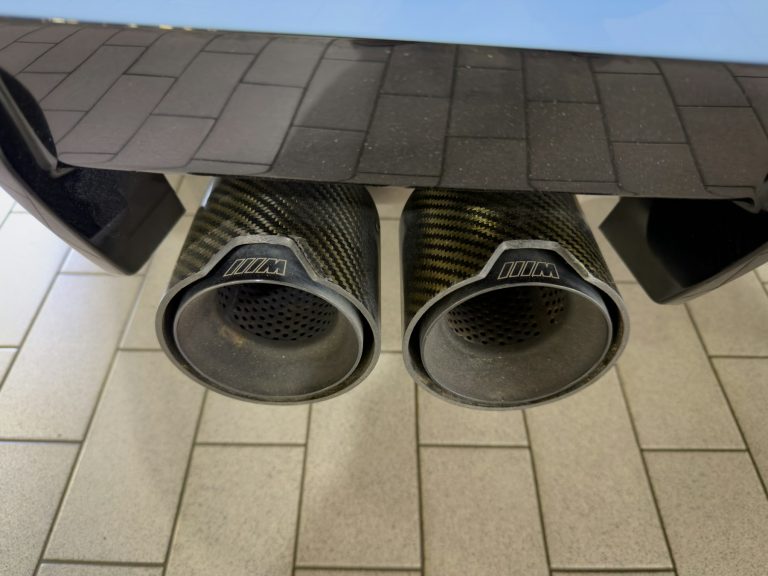
- Visible welds. Railings, furniture, exhaust, display pieces: TIG leaves little to grind.
- Repairs on castings and odd parts. The welder can slow down, add heat exactly where needed and stop at any moment.
When MIG is the better choice
- Thick steel. Trailer frames, heavy brackets, structural pieces. MIG lays more metal per minute.
- Long welds in volume. Production runs where speed matters more than looks.
- Budget-driven jobs. When the weld will be painted or hidden, MIG often does the job for less.
- Outdoor steel with flux-core wire. A self-shielded wire handles wind better than any gas-shielded process.
The right process is the one that fits the metal, the thickness and how the part will be used, not the one that sounds fancier.
Strength: the most common misunderstanding
People often assume TIG welds are stronger. Done correctly, both processes produce welds that are as strong as or stronger than the metal around them. What makes a weld weak is poor fusion, contamination or the wrong filler, and those come down to the welder and the prep, not the letters on the machine. TIG simply makes it easier to get fusion right on difficult materials.
What it means for your cost
Because TIG is slower, a TIG job usually costs more in labor per inch of weld. On a small repair the difference is minor. On a long seam on thick plate it can be significant, and we’ll tell you if MIG would serve you just as well. For a breakdown of what drives price, see how to get an accurate welding quote.
The bottom line
If your part is aluminum, stainless, thin, visible or delicate, TIG is almost always the better choice. If it’s thick steel that will be painted or hidden, MIG is often faster and cheaper with no loss of strength. Not sure? Send us a photo and we’ll tell you which process makes sense, even if the answer is that another shop’s MIG setup is the better fit.
Frequently asked questions
Is a TIG weld stronger than a MIG weld?
Not automatically. A correctly made MIG weld and a correctly made TIG weld can both be stronger than the base metal. TIG makes it easier to control fusion on thin or tricky material, which is why it’s preferred there.
Why does TIG welding cost more?
TIG is slower. The welder controls the torch with one hand and feeds filler with the other, and prep has to be cleaner. More time per inch of weld means a higher labor cost.
Can you TIG weld thick steel?
Yes, but it takes many passes. On thick structural steel, MIG or stick is usually faster and more economical.