Stainless steel is the default for food and beverage equipment because it’s strong, it resists corrosion and it can be cleaned hard every day. But the welds are where stainless equipment is most vulnerable. A weld that looks fine from the outside can hide a rough, oxidized inside surface or a tiny crevice that holds bacteria and starts corrosion.
Here’s what separates an everyday stainless weld from one that belongs in food service.
1. Full penetration, no crevices
On tube, pipe and tank fittings, the weld should fuse all the way through the joint so the inside is a smooth, continuous surface. Partial penetration leaves a gap at the root, a perfect place for product and bacteria to collect where cleaning can’t reach. On sheet equipment like tables and sinks, corners and seams should be fully welded and blended, not stitched or caulked.
2. Back purging
When the inside of a weld is exposed to air, it oxidizes into a rough, crusty surface welders call sugar. Sugar can’t be cleaned properly and corrodes. To prevent it, the inside of the tube or fitting is filled with argon during welding (back purging) so the root comes out smooth and silver. Purging takes extra time and fittings, and it’s one of the main differences in cost between sanitary and general stainless work.
3. Low heat and controlled heat tint
Every stainless weld leaves some heat tint, colors from pale straw to dark blue. Light straw is generally acceptable; dark blue, purple and gray mean the protective chromium layer near the surface has been damaged and corrosion resistance drops. TIG welding with low heat input, good gas coverage and proper cleaning afterward keeps tint under control. We explain the colors in detail in what stainless heat tint colors mean.
4. The right grade and filler
- 304 stainless is the everyday grade for kitchens, tables and many beverage parts.
- 316 stainless adds molybdenum for better resistance to salt, chlorides and aggressive cleaners.
- Low-carbon “L” grades (304L, 316L) resist corrosion at the weld better and are common in sanitary work.
- Filler rod is matched to the base metal so the weld behaves like the rest of the part.
5. Finish you can clean
After welding, the weld area is blended and finished to match the surrounding surface, usually a brushed finish on equipment and a smooth finish on product-contact areas. Rough grinding marks hold soil, so the finish matters as much as the weld.
Codes and paperwork
Some facilities require welds to follow specific standards or documented procedures, with records and inspections. If your plant or customer has requirements like that, share them before work starts so the welding shop can confirm it can meet them. A good shop will tell you plainly if a job is outside what it’s set up to document.
Common kitchen and brewery repairs
- Cracked legs and crossbars on prep tables and sinks
- Split corners on sinks and drainboards
- Loose or broken hood and shelf brackets
- Leaking fittings and ports on tanks and kegs
- Broken handles, rails and guards on equipment
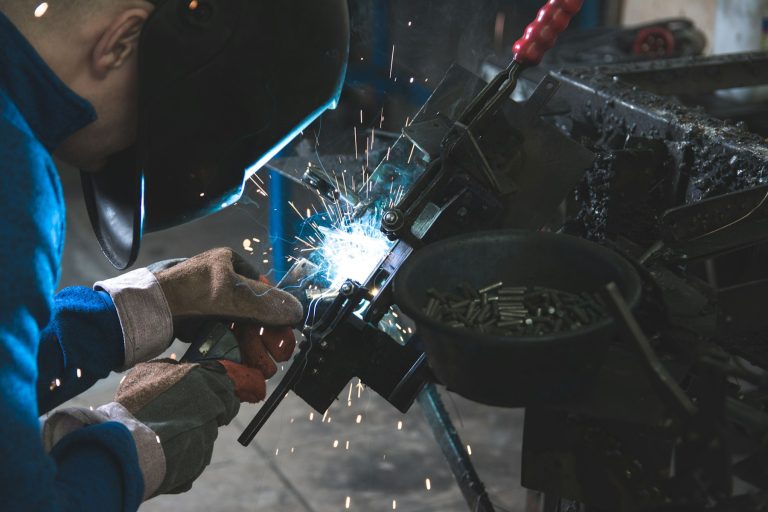
Many of these can be done on site with mobile TIG welding, scheduled around service. For anything in direct product contact, shop work usually gives the best result.
Have a stainless repair or fitting job? See our stainless steel TIG welding service or send photos for a quote.
Frequently asked questions
Is 304 stainless food-grade?
304 is widely used for food contact surfaces. 316 is chosen where chlorides, salt or harsh cleaning chemicals are present. Your equipment maker or inspector may specify one.
What is sugaring on a stainless weld?
Sugaring is a crusty, oxidized surface on the back side of a weld that wasn’t shielded with gas. It traps bacteria and corrodes, so sanitary welds are back purged to prevent it.
Can a restaurant prep table be welded in place?
Often yes, with mobile TIG equipment, as long as the area can be cleared and protected from sparks and heat.