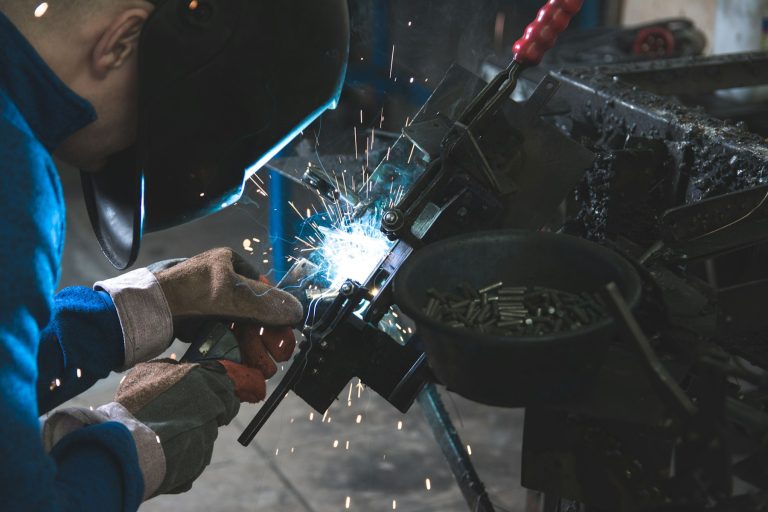
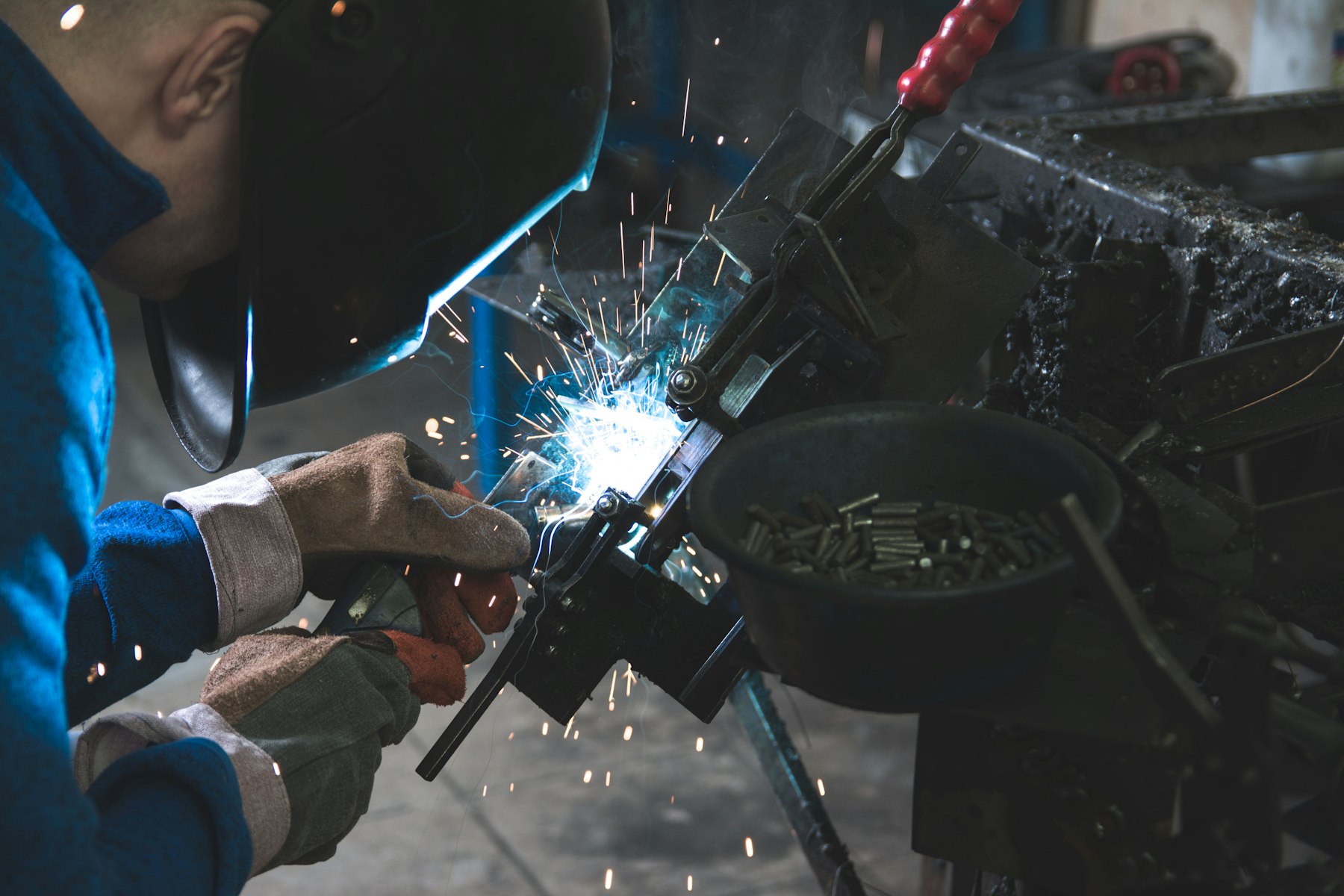
Aluminum is everywhere in North Texas: jon boats and bass boats on the lakes, horse and utility trailers, truck racks, toolboxes, fuel tanks and the cast housings on engines and pumps. It’s light, it doesn’t rust like steel, and it’s one of the hardest common metals to weld well.
Knowing why helps you decide what can be fixed, what to expect, and how to get your part ready.
Three things make aluminum difficult
1. The oxide layer
Bare aluminum forms a thin, hard oxide skin within minutes of exposure to air. That skin melts at roughly 3,700°F, while the aluminum under it melts around 1,200°F. Weld through it without cleaning and you trap oxide in the puddle, which leaves inclusions and weak spots. AC TIG welding helps by breaking up the oxide during the cleaning half of each cycle, but mechanical and chemical cleaning before welding is still essential.
2. It moves heat fast
Aluminum conducts heat several times faster than steel. The heat spreads away from the joint, so the welder has to put in a lot of energy to start the puddle and then back off quickly once the part heats up. On thin sheet, that’s the difference between a clean bead and a hole.
3. No warning before it melts
Steel glows and changes color as it heats. Aluminum doesn’t. It goes from solid to sagging with very little warning, which is why aluminum welding takes practice and careful heat control.
What usually can (and can’t) be repaired
- Usually repairable: cracked boat ribs and seams, transom brackets, trailer cross members and fenders, tank seams, racks, toolboxes, many cast housings.
- Sometimes repairable: old castings full of oil and porosity, parts thinned by corrosion, heat-treated parts where a repair may reduce strength locally.
- Usually better replaced: safety-critical heat-treated components (some wheels, suspension and aircraft parts) where welding voids the rating.
How to prepare a boat or trailer for a repair
- Remove fuel, batteries and anything flammable near the repair.
- Pressure-wash the area and let it dry completely.
- Take photos of both sides of the crack, with a tape measure in the frame.
- Note when the crack appeared and what the part was doing at the time.
- Don’t fill the crack with sealant or epoxy; it has to be ground out anyway and the residue contaminates the weld.
We do the final prep ourselves: grinding to bright metal, scrubbing with a stainless brush used only on aluminum, and wiping with solvent right before welding.
Filler rod: 4043 vs. 5356
The two most common aluminum fillers behave differently. 4043 flows well and resists cracking, and it’s a common choice for castings and 6061 repairs. 5356 is stronger and stays closer in color if the part will be anodized, and it’s often used on marine 5052 and 5086. The right choice depends on the base alloy, the load and the finish. It’s one reason we ask what the part does.
Cosmetics and anodizing
Welding burns through anodizing and paint. The weld area will look different from the rest of the part, and on anodized parts the only real fix is to re-anodize after welding. If appearance matters, tell us before we start so we can plan the weld placement and finish.
Get a straight answer first
The fastest way to know if your part is worth repairing is to send clear photos. We’ll tell you what we’d do, whether it’s a quick fix or a reinforcement job, and whether replacement makes more sense. Start with our aluminum TIG welding page or send your photos here.
Frequently asked questions
Can you weld aluminum to steel?
Not directly with normal TIG or MIG. The two metals form brittle compounds. Joining them usually means bolting, riveting or using a special transition insert.
Why do aluminum welds turn black or sooty?
Usually contamination: oil, paint, corrosion or a dirty filler rod, or too little AC cleaning action. Proper prep fixes most of it.
How long does an aluminum weld repair last?
A correct repair on clean, sound metal should last as long as the part around it. Repairs fail early when the crack wasn’t fully removed or the area keeps flexing.