
Short answer
Can a cracked metal part be welded?
Most cracked aluminum, stainless and steel parts can be repaired by grinding the crack out completely, preparing the metal properly and rewelding. Whether it should be repaired depends on why it cracked, how much sound metal is left and what the part does. Safety-critical parts sometimes need replacing instead.
First, why did it break?
A weld or part usually cracks for a reason: vibration, overload, a sharp corner that concentrates stress, a weld that never fused at the root, or metal worn thin by rust. If we just cover the crack with a new bead, it returns. We look at where it started and fix the cause too: a gusset, a smoother transition or a thicker plate.
Grind out, then weld
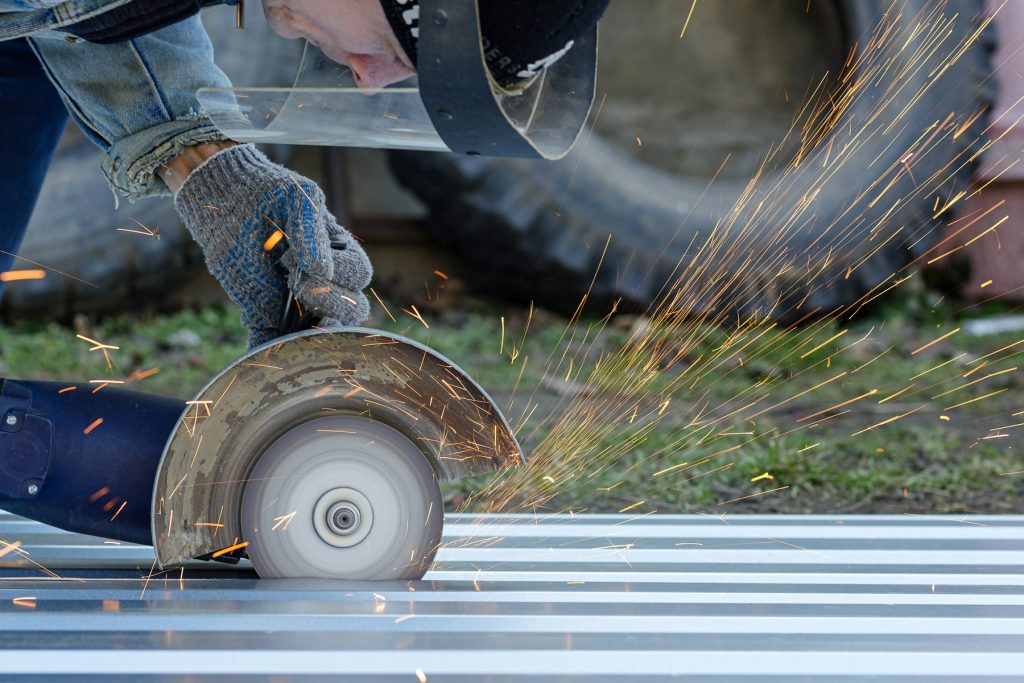
We drill or mark the crack ends so it can't keep running, grind a groove until the crack is gone, clean to bright metal and then weld from the root up. On thick parts that means several passes. On cast iron and old castings it can mean preheat and slow cooling. This is the part of a repair you can't see, and it decides whether the repair lasts.
What you get with every job
Root-cause check
We look at why it failed, not just where.
Full crack removal
Ground out to sound metal before welding.
Reinforcement when needed
Gussets, doublers or better transitions.
Straight answers
If replacement is safer, you'll hear it from us.
Fixing old repairs
A lot of what comes in is a previous repair: a pile of bead on top of a crack, a patch over rust, or a MIG weld that sat on the surface without fusing. We cut those out back to sound metal and do it again. It takes longer than welding over the top, and it's the only way it holds.
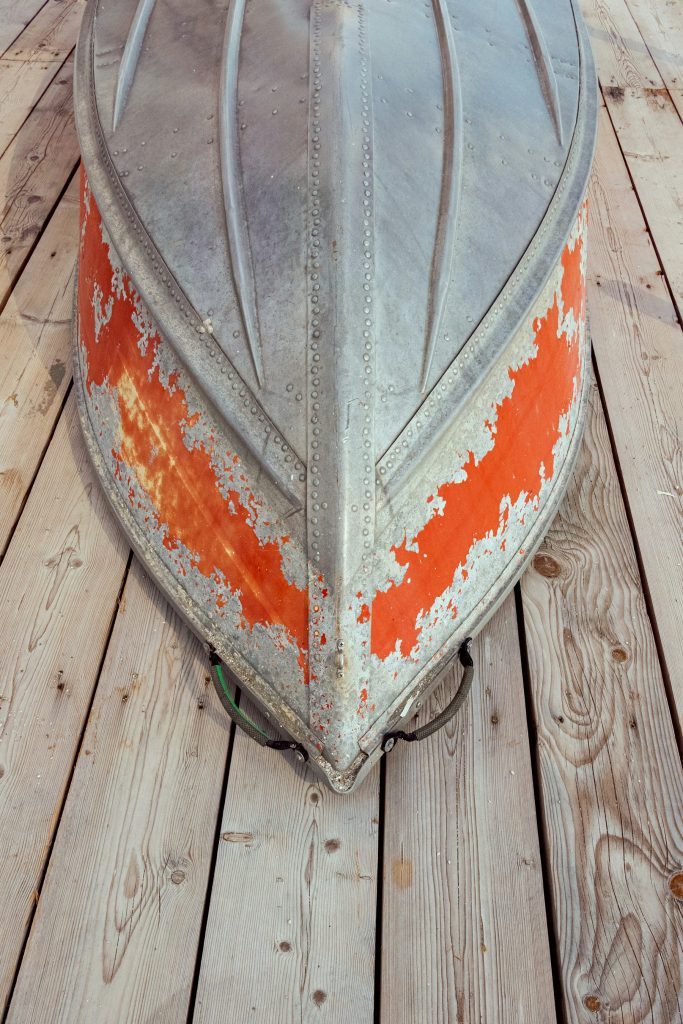
Old aluminum hulls often have years of patched repairs that need cutting back to sound metal.
When we'll say no
Some parts shouldn't be welded: certain hardened or heat-treated components, parts with a rating that welding would void, or parts where there isn't enough good metal left. If that's the case, we'll tell you and help you figure out a replacement instead.
Weld Repair: common questions
Why does my weld keep cracking in the same spot?
Usually because the crack was never fully removed, the weld didn't fuse at the root, or the part is flexing at a stress point. Fixing the cause, often with a gusset or smoother transition, stops it.
Can you weld cast iron?
Sometimes. Cast iron needs careful preheat, the right filler and slow cooling, and some castings don't take it well. Send photos so we can judge it before you bring it in.
Can you repair a weld someone else did?
Yes. We cut the old weld back to clean metal and reweld it correctly.
Will a welded repair be as strong as new?
A correct repair on a sound part can be as strong as the original or stronger with reinforcement. We'll tell you if a part is better replaced.